


A stabilizer is a chemical additive added to polyvinyl chloride (PVC) to improve its thermal and mechanical properties.
Advantages of Stabilizer
Heat stability: PVC is sensitive to high temperatures, and when exposed to heat during processing or in service, it can undergo thermal degradation, resulting in color change, loss of mechanical properties, and ultimately material failure. Stabilizers help prevent or minimize heat-induced degradation, maintaining the integrity and performance of the PVC product.
UV resistance: When PVC is exposed to sunlight and UV radiation, it can undergo photo-oxidative degradation, causing yellowing, brittleness, and surface cracking. UV stabilizers in PVC formulations protect the material from the harmful effects of UV rays, preserving its appearance and extending its service life in outdoor applications.
Weatherability: Outdoor PVC applications, such as building materials, need to withstand various weather conditions, including rain, humidity, and temperature fluctuations. Stabilizers enhance the PVC's resistance to weathering, preventing it from degrading or becoming brittle over time.
Oxidation resistance: PVC is susceptible to oxidation, especially when in contact with certain chemicals or environmental pollutants. Stabilizers act as antioxidants, inhibiting the oxidation process and maintaining the PVC's performance and appearance.
Color stability: Stabilizers help prevent color changes in PVC due to exposure to light, heat, and other environmental factors, ensuring that the material retains its original color and appearance over an extended period.
Processability: PVC stabilizers improve the processability of PVC during manufacturing processes such as extrusion, injection molding, and calendering. They ensure smooth processing, uniformity, and consistency in the final product.
Flame retardancy: In some applications where fire safety is critical, certain stabilizers contribute to improving the PVC's flame retardancy, reducing the risk of fire spread and enhancing safety.
-
![PVC Additive Environment PVC Stabilizer Liquid Calcium Zinc Compound PVC Heat Stabilizer]() PVC Additive Environment PVC Stabilizer Liquid Calcium Zi...The stabilizers are formulated to meet specific requirements such as no-toxic, good initial color, long-term stability, good transparency, good printability, weather and aging resistance, goodread more
PVC Additive Environment PVC Stabilizer Liquid Calcium Zi...The stabilizers are formulated to meet specific requirements such as no-toxic, good initial color, long-term stability, good transparency, good printability, weather and aging resistance, goodread more -
![Barium-Zinc Stabilizer For Polyamides]() Barium-Zinc Stabilizer For PolyamidesJBZ-316A2 Barium-Zinc Stabilizer is a high-efficiency PVC stabilizer offering excellent heat resistance, thermal stability, and minimal additive needs. It maintains high transparency, preventsread more
Barium-Zinc Stabilizer For PolyamidesJBZ-316A2 Barium-Zinc Stabilizer is a high-efficiency PVC stabilizer offering excellent heat resistance, thermal stability, and minimal additive needs. It maintains high transparency, preventsread more -
![Barium-Zinc Stabilizer For Outdoor Water Pipe]() Barium-Zinc Stabilizer For Outdoor Water PipeBarium-Zinc Stabilizer For Outdoor Water Pipe JBZ-316A2 is a high-efficiency barium-zinc stabilizer designed for PVC, offering excellent heat resistance and thermal stability with minimal additiveread more
Barium-Zinc Stabilizer For Outdoor Water PipeBarium-Zinc Stabilizer For Outdoor Water Pipe JBZ-316A2 is a high-efficiency barium-zinc stabilizer designed for PVC, offering excellent heat resistance and thermal stability with minimal additiveread more -
![PVC Calcium-Zinc Stabilizer]() PVC Calcium-Zinc StabilizerCalcium zinc stabilizers are eco-friendly, non-toxic alternatives to traditional lead-based stabilizers, widely used in PVC formulations.read more
PVC Calcium-Zinc StabilizerCalcium zinc stabilizers are eco-friendly, non-toxic alternatives to traditional lead-based stabilizers, widely used in PVC formulations.read more -
![Calcium Zinc(CaZn) Heat Stabilizer JCZ-401]() Calcium Zinc(CaZn) Heat Stabilizer JCZ-401JCZ-401 Calcium Zinc Heat Stabilizer offers exceptional heat resistance, ensuring the integrity of PVC products in demanding conditions while allowing for a lower dosage that enhancesread more
Calcium Zinc(CaZn) Heat Stabilizer JCZ-401JCZ-401 Calcium Zinc Heat Stabilizer offers exceptional heat resistance, ensuring the integrity of PVC products in demanding conditions while allowing for a lower dosage that enhancesread more -
![High Compatibility Calcium Zinc Stabilizer JCZ-401]() High Compatibility Calcium Zinc Stabilizer JCZ-401JCZ-401 is a high-performance liquid calcium-zinc heat stabilizer, offering superior heat resistance, transparency, and environmental safety for PVC applications. Ideal for healthcare, automotive,read more
High Compatibility Calcium Zinc Stabilizer JCZ-401JCZ-401 is a high-performance liquid calcium-zinc heat stabilizer, offering superior heat resistance, transparency, and environmental safety for PVC applications. Ideal for healthcare, automotive,read more -
![Liquid Calcium-Zinc PVC Stabilizer-PVC]() Liquid Calcium-Zinc PVC Stabilizer-PVCJCZ-301 is an eco-friendly liquid PVC stabilizer designed for high performance and global compliance. Our Liquid Calcium-Zinc heat stabilizer-PVC JCZ-301 is a safe and environmentally friendlyread more
Liquid Calcium-Zinc PVC Stabilizer-PVCJCZ-301 is an eco-friendly liquid PVC stabilizer designed for high performance and global compliance. Our Liquid Calcium-Zinc heat stabilizer-PVC JCZ-301 is a safe and environmentally friendlyread more -
![High-quality Transparent Calcium-Zinc Stabilizer]() High-quality Transparent Calcium-Zinc StabilizerCalcium/zinc-stabilized materials possess characteristics that make them suitable for a variety of flexible and rigid PVC applications. This stabilizing system yields products with high clarity,read more
High-quality Transparent Calcium-Zinc StabilizerCalcium/zinc-stabilized materials possess characteristics that make them suitable for a variety of flexible and rigid PVC applications. This stabilizing system yields products with high clarity,read more -
![Ca-Zn Stabilizer Pvc Ca-Zn Stabilizer For PVC Wallpaper]() Ca-Zn Stabilizer Pvc Ca-Zn Stabilizer For PVC WallpaperJCZ-301 is an eco-friendly liquid PVC stabilizer designed for high performance and global compliance. Approved by RoHS and SGS, it's perfect for producing non-toxic flexible PVC products. Withread more
Ca-Zn Stabilizer Pvc Ca-Zn Stabilizer For PVC WallpaperJCZ-301 is an eco-friendly liquid PVC stabilizer designed for high performance and global compliance. Approved by RoHS and SGS, it's perfect for producing non-toxic flexible PVC products. Withread more -
![Ca/Zn Stabilizer(liquid)]() Ca/Zn Stabilizer(liquid)JCZ-201 is a high-quality, transparent, light-yellow oily liquid developed as an eco-friendly PVC stabilizer. It provides great value while adhering to strict safety and environmental standards,read more
Ca/Zn Stabilizer(liquid)JCZ-201 is a high-quality, transparent, light-yellow oily liquid developed as an eco-friendly PVC stabilizer. It provides great value while adhering to strict safety and environmental standards,read more -
![PVC Calcium-Zinc Stabilizer (liquid)]() PVC Calcium-Zinc Stabilizer (liquid)This product, JCZ-201, is a high-quality, transparent oily liquid with a light yellow hue, designed as an environmentally friendly PVC stabilizer. Offering excellent value, it meets stringent safetyread more
PVC Calcium-Zinc Stabilizer (liquid)This product, JCZ-201, is a high-quality, transparent oily liquid with a light yellow hue, designed as an environmentally friendly PVC stabilizer. Offering excellent value, it meets stringent safetyread more -
![Liquid Calcium-Zinc PVC Stabilizer]() Liquid Calcium-Zinc PVC StabilizerJCZ-301 is an eco-friendly liquid PVC stabilizer designed for high performance and global compliance. Approved by RoHS and SGS, it's perfect for producing non-toxic flexible PVC products. Withread more
Liquid Calcium-Zinc PVC StabilizerJCZ-301 is an eco-friendly liquid PVC stabilizer designed for high performance and global compliance. Approved by RoHS and SGS, it's perfect for producing non-toxic flexible PVC products. Withread more

Why Choose Us
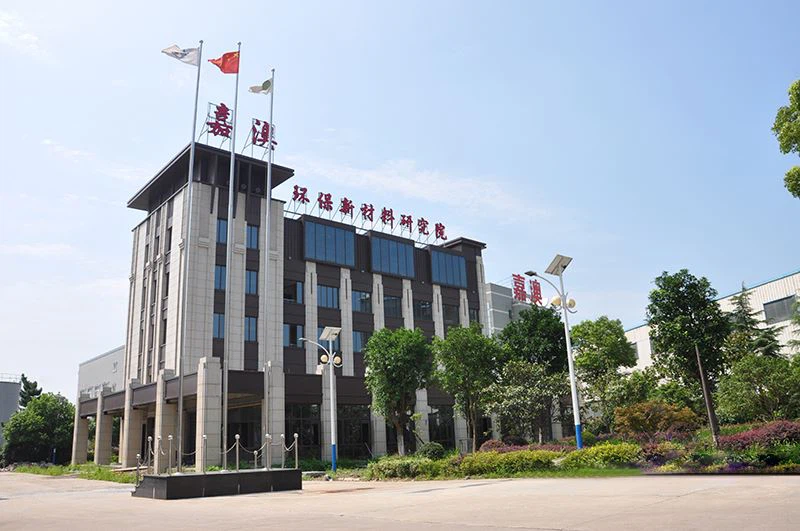
Our factory
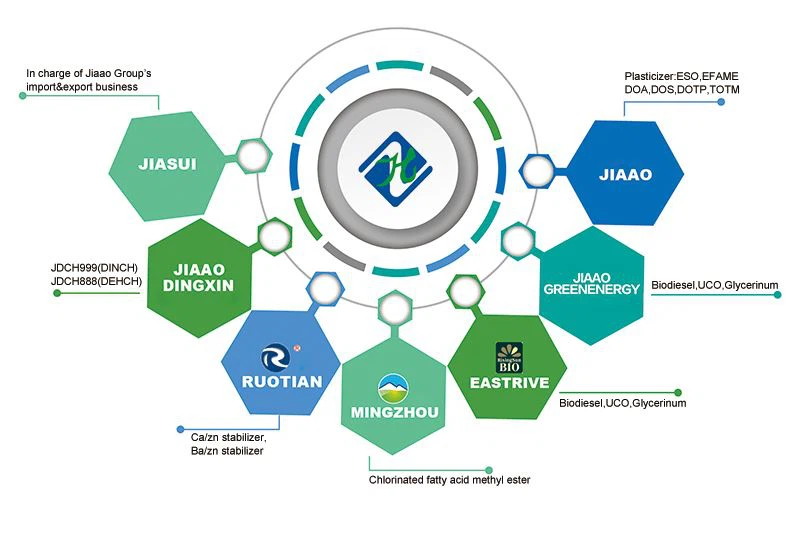
JIAAO ENPROTECH was founded in Jan, 2003, specializing in research, production and sales of environment friendly plasticizers. Company was listed on Shanghai Stock Exchange A-share on April 28, 2016, stock code 603822.
High quality
We are manufacturers of environmentally friendly plasticizers, stabilizers, and biodiesel, specializing in the development of eco-friendly, renewable, and biodegradable bio-based plasticizers. Our diverse range of products is widely used in various plastic product sectors associated with daily life.
Quality control
Our company manufactures a wide range of non-toxic, environment-friendly plasticizers, the main plasticizers are registered in EU's REACH, testified by SGS, products reach the international Non-toxic and environmental protection Standard .
Professional team
Recognized as a National Torch Program high-tech enterprise, the company holds numerous national patents and actively contributes to industry standards.With a robust R&D system and talent cultivation mechanism, including recruitment of PhDs and Masters, the company focuses on high-value biomass energy products research.
Innovation
With a vision to become a global leader in environmental biomass energy, the company's efforts in product innovation and development aim to drive advancements in this field.
Types of Stabilizer

Lead-based stabilizers
These were the first generation of PVC stabilizers and are still used in some applications. However, due to their toxicity, they are being phased out in many countries. Lead-based stabilizers work by reacting with the degradation products of PVC and forming stable complexes.
Calcium-based stabilizers
These are the most commonly used PVC stabilizers today. Calcium-based stabilizers work by reacting with hydrogen chloride, which is generated during PVC degradation, and neutralizing it. This prevents the formation of hydrochloric acid, which can accelerate PVC degradation.
Tin-based stabilizers
These stabilizers work by reacting with PVC and forming a protective layer on the surface. Tin-based stabilizers are effective at low temperatures and are often used in applications such as outdoor profiles and window frames.
Organic stabilizers
These stabilizers are based on organic compounds such as phenols, amines, and phosphites. Organic stabilizers work by scavenging free radicals generated during PVC degradation and preventing chain scission.
Barium-based and mixed metal stabilizers
Barium-based and mixed metal stabilizers are commonly used in PVC formulations due to their excellent thermal stability and cost-effectiveness. These stabilizers work by reacting with the hydrogen chloride that is released during the PVC degradation process, thus preventing the formation of hydrochloric acid.
Application of Stabilizer
Construction industry
Stabilizers are widely used in various PVC building materials, such as PVC window frames, PVC floors, PVC pipes, etc. Stabilizers can improve the UV resistance, oxidation resistance and weather resistance of PVC materials, ensuring the stability and durability of building materials for long-term use.
Packaging industry
Stabilizers are also widely used in PVC packaging materials, such as PVC film, PVC bottle caps, etc. Stabilizers can improve the thermal stability and light stability of PVC packaging materials, enhance their heat resistance and weather resistance, and protect the quality and safety of packaged items.
Automobile industry
Stabilizers are widely used in PVC products such as automotive interior parts and body decoration parts. Stabilizers can improve the thermal stability and weather resistance of PVC materials, increase their service life, and at the same time provide good surface gloss and color stability.
Electronic and electrical industry
Stabilizers are widely used in PVC products such as wires and cables, electronic product casings, etc. Stabilizers can improve the thermal stability and electrical properties of PVC materials, and ensure the safety and reliability of electronic and electrical products.
Outdoor signage and advertising
PVC-based materials are extensively used in outdoor signage, billboards, and advertising displays due to their durability and cost-effectiveness. Stabilizers protect PVC from degradation caused by sunlight, moisture, and temperature variations, ensuring the longevity and visual appeal of these outdoor advertising mediums.
Medical equipment
PVC is extensively used in medical equipment due to its excellent transparency, flexibility, and resistance to sterilization techniques. Stabilizers play a vital role in maintaining the properties of PVC medical devices, such as medical tubing, blood bags, and oxygen mask. Stabilizers like Calcium zinc-based provide the necessary heat stability and ensure the biocompatibility of PVC in contact with human tissues.
What Is PVC Stabilizer Made Of?
PVC stabilizers are composed of a synergistic blend of compounds designed to deal with specific vulnerabilities in the PVC matrix. The key components typically consist of heat stabilizers, light stabilizers, lubricants, and antioxidants. By working together in a synergistic manner, these components within the stabilizer blend safeguard the integrity of PVC products, ensuring their resilience and functionality in various environmental conditions.
Heat Stabilizers: These components act like a thermal shield for PVC, making sure that even when the heat is rising substantially, the material retains its structural integrity and mechanical properties.
Light Stabilizers: Protecting PVC from ultraviolet (UV) radiation is crucial for outdoor applications. Light stabilizers prevent UV-induced degradation, which can lead to color fading, embrittlement and overall deterioration of the material.
Lubricants: Lubricants are added to PVC formulations to make the processing a lot easier and enhance the flow of the material during manufacturing as well. Moreover, they contribute to the stability of the PVC matrix.
Antioxidants: Antioxidants are incorporated to inhibit the oxidation of PVC. They prevent harmful chemical reactions (oxidation) from happening inside the material. Hence, maintaining the material’s resistance to oxidative degradation.
Process of Stabilizer
Raw material sourcing
Raw materials used in stabilizers typically include metal oxides or hydroxides, and organic compounds such as polyols. Zinc oxide is a common metal oxide, while pentaerythritol is a frequently used polyol.
Mixing and blending
These ingredients are precisely measured and mixed to achieve the correct proportions. They are then blended to form a homogenous mixture, ensuring uniform distribution of each component.
Compounding
The mixture undergoes compounding, where it is further processed to be integrated seamlessly with PVC. This step may involve heating the mixture to induce the necessary chemical reactions.
Pelletizing
Post-compounding, the stabilizer is formed into pellets. This form is more manageable and is preferred for ease of distribution and incorporation into PVC manufacturing processes.
Quality control
Lastly, quality control tests are conducted on the stabilizer pellets. Tests confirm attributes like thermal stability and composition accuracy.
Safety Precautions When Using the Stabilizer
Before adding and using stabilizer, we must first understand its compatibility with the added polymer. If the stabilizer reacts with the added polymer, its application effect will be counterproductive.
In the process of manufacturing PVC products by production technology, most of the time, it is not only possible to use a certain plastic additive at the same time. Therefore, during the processing, we should also pay attention to the relationship between the stabilizer and other plastic additives. Capacitive.
Different plastic products have different requirements for the performance, odor, stability and other characteristics of the stabilizer to be added. Before operating the system, you should analyze the specific situation according to the specific problem and choose a suitable composite stabilizer.
The appropriate amount of stabilizer should be paid attention to during use, too much or too little will not achieve the required stabilizing effect.
What Are the Trends and Development Directions of Stabilizer in the Market
Emphasis on health and safety regulations
The focus on minimizing toxic additives in PVC manufacturing is driving the adoption of safer stabilizers, which are compliant with international standards. This demand for compliant stabilizers is reflected in a growing market share for non-toxic alternatives, expected to witness a substantial CAGR in the coming years. Regulatory compliance is also spurring innovation in stabilizer formulations that meet both safety and performance criteria.
Significant innovations in material science
Innovations in the field of material science are unlocking new potential for PVC stabilizers. High-performance stabilizers that offer improved thermal resistance and durability are now under development, with several already on the market. This innovation surge is motivated by industrial needs for more resilient, long-lasting PVC products in sectors like construction, healthcare, and automotive. Cutting-edge research is opening doors for stabilizers that can offer enhanced material characteristics while being cost-effective, thereby meeting the dual objectives of quality and affordability.
Mergers and collaborations
The PVC stabilizer market is experiencing a wave of consolidations and strategic partnerships. These strategic movements are essential in driving the market forward as they pool together technical expertise and widen resource availability. For instance, collaborations between raw material suppliers and stabilizer manufacturers are not only expanding the product line but are also improving the overall efficiency and sustainability of PVC stabilizers. This is contributing to the market growth significantly.
Our Factory
JIAAO ENPROTECH was founded in Jan, 2003, specializing in research, production and sales of environment friendly plasticizers. Company was listed on Shanghai Stock Exchange A-share on April 28, 2016, stock code 603822.After years of hard work, JIAAO ENPROTECH now has formed the 3 main product species, i.e. Epoxy products, Fossil products and Multifunctional composite products. Our plasticizers are widely used in cable, artificial leather, flocking, light box membrane, plastic film, plastic decking, outdoor water pipe, etc.

Our certificates


video
FAQ
Q: What is one pack PVC stabilizer?
Q: What is the best stabilizer for PVC?
Q: What stabilizer is used in plastic?
Q: What is PVC stabilizer used for?
Q: What do Stabilisers do in plastic?
Q: Why would you add a stabiliser to a plastic?
Q: What is the formulation of PVC heat stabilizer?
Q: Why is stabilizers added to polypropylene?
Q: What is the difference between plasticizers and stabilizers?
Q: What is the use of PVC stabilizer?
Q: What is the primary stabilizer for PVC?
Q: What stabilizer is used in plastic?
Q: What is the heat stabilizer used in PVC?
Q: What are calcium zinc stabilizers for PVC?
Q: What stabilizer is used in PVC pipe?
Q: Why are plasticisers added to PVC?
Q: What is the role of stabilizers in polymers?
Q: How does PVC stabilizer work?
Q: What are the chemicals in PVC heat stabilizer?
Q: What is the chemical name for stabilizer?
We're well-known as one of the leading stabilizer manufacturers and suppliers in China. If you're going to buy high quality stabilizer at competitive price, welcome to get more information from our factory.