


Biodiesel is a nontoxic, biodegradable, combustible liquid fuel. It is a domestic, renewable fuel derived from natural vegetable and animal oils.Biodiesel is comprised of mono-alkyl esters of long-chain fatty acids.
Advantages of Biodiesel
Renewable energy source
Biofuels are renewable energy sources, which means that they are made from biological components that may be regenerated over time. Biofuels can be produced continuously, unlike fossil fuels, which take millions of years to create and are finite. This makes them a more sustainable option.
Lower greenhouse gas emissions
Biofuels emit fewer greenhouse gases compared to fossil fuels. When biofuels are burned, they release carbon dioxide, but because the carbon dioxide was recently absorbed by the plants during their growth, there is a net zero increase in atmospheric carbon dioxide. This is in contrast to burning fossil fuels, which release carbon dioxide that has been stored in the earth for millions of years.
Domestic production
Biodiesel is made from vegetable oils or animal fats, such as used cooking oil or animal tallow. It can be used as a replacement for diesel fuel in vehicles or as a heating oil.
Increased energy security
Using biofuels can increase energy security by diversifying the energy supply. If one source of energy becomes unavailable or unaffordable, alternative energy sources such as biofuels can provide a reliable source of energy.
Economic benefits
The production and use of biofuels can create new jobs in a variety of industries, including agriculture, engineering, and transportation. This can have positive economic benefits, particularly in rural areas where job opportunities may be limited.
Higher cetane number
For biodiesel the cetane numbers are generally between 46 and 60 depending on the feedstocks used to make the biodiesel. Methyl esters tend to be slightly below ethyl and higher esters. Biodiesel from saturated feedstocks such as animal fat and recycled restaurant greases will be higher than the esters of oils high in polyunsaturates such as soybean oil.
Cleaner burning
Biodiesel emissions are significantly lower compared to diesel fuel (except for nox). Research on a newer engine showed a lower nox emission. Research on an alternative nox reduction system called a nox adsorber catalyst (nac) demonstrated increased nox conversion for biodiesel because biodiesel leads to reduced exhaust temperature.
Nontoxic environmentally friendly
Compared to other fossil fuels during burning, biodiesel has proved to be a non-toxic fuel producing lower emissions that restrict the risk of respiratory illness. It has a lower flash point than conventional diesel because it ignites at higher temperatures. It is less risky to ignite accidently, making it easy to transport and store and much safer. Like sugar, biodiesel is degradable and ten times less toxic than table salt.
Adds to fuel lubricity
Lubricity is defined as the ability of a fluid to minimize the degree of friction between surfaces in relative motion under load conditions. Low lubricity means rapid engine wear and tear. Even 1% of biodiesel adds enough lubricity in fuel and enhances engine performance.
Interchangeability
Use of biodiesel needs no engine modification. Biodiesel blends up to 5% meet the same specifications as diesel fuel.
-
![Alternative Energy Fatty Acid Methyl Ester]() Alternative Energy Fatty Acid Methyl EsterEnvironmental Protection Refined Fatty Acid Methyl Ester Molecular formula:RCOO CH3 Molecular weight:Abt 295 Ingredient:99.5% Fatty Acid Methyl Ester ,0.5% Impurit Application: used as biomass isread more
Alternative Energy Fatty Acid Methyl EsterEnvironmental Protection Refined Fatty Acid Methyl Ester Molecular formula:RCOO CH3 Molecular weight:Abt 295 Ingredient:99.5% Fatty Acid Methyl Ester ,0.5% Impurit Application: used as biomass isread more

Why Choose Us
Our factory
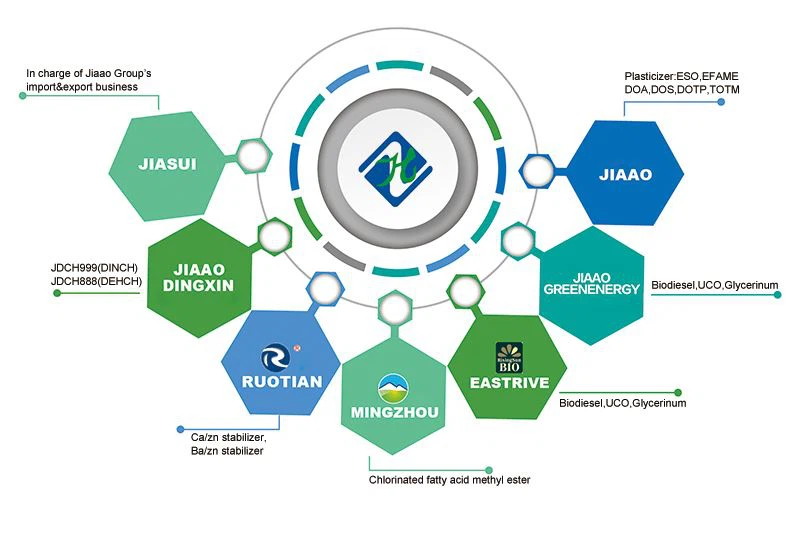
JIAAO ENPROTECH was founded in Jan, 2003, specializing in research, production and sales of environment friendly plasticizers. Company was listed on Shanghai Stock Exchange A-share on April 28, 2016, stock code 603822.
High quality
We are manufacturers of environmentally friendly plasticizers, stabilizers, and biodiesel, specializing in the development of eco-friendly, renewable, and biodegradable bio-based plasticizers. Our diverse range of products is widely used in various plastic product sectors associated with daily life.
Quality control
Our company manufactures a wide range of non-toxic, environment-friendly plasticizers, the main plasticizers are registered in EU's REACH, testified by SGS, products reach the international Non-toxic and environmental protection Standard .
Professional team
Recognized as a National Torch Program high-tech enterprise, the company holds numerous national patents and actively contributes to industry standards.With a robust R&D system and talent cultivation mechanism, including recruitment of PhDs and Masters, the company focuses on high-value biomass energy products research.
Innovation
With a vision to become a global leader in environmental biomass energy, the company's efforts in product innovation and development aim to drive advancements in this field.
Types of Biodiesel

Biodiesel produced from vegetable oils
It is made from oil extracted from oleaginous plants such as rapeseed, sunflower, palm, soybean, and marine plants, such as algae. It is one of the most widespread methods of production, and raw materials are already being cultivated to produce biodiesel.

Biodiesel produced from animal fats
It is also possible to produce biodiesel from animal fats, by extracting and processing the lipids. In Spain, pork, bovine, or poultry fats are usually used.
Biodiesel extracted from used cooking oils
This is the most affordable option and the one that most promotes the circular economy and recycling, as it consists of using used cooking oil in homes, the catering businesses, or the agri-food industry.
Application of Biodiesel
Automobiles
The major consumption of biodiesel is for blending it with petroleum-based diesel in various proportions for burning it in the diesel engines automobiles. However, different vehicle manufacturers recommend different blends containing various levels of biodiesel for their diesel engines.
Railways
Railway engines were using coal as a fuel initially. However, with the advent of diesel engines, most of the railways started using diesel engines and petroleum-based diesel as their fuel. Later, a large portion of these railway engines were converted to electricity-driven engines to pull the rakes, wherever feasible. Due to various reasons, many railway engines are still run on diesel engines. Many of these have been modified in the last decade or more to consume biodiesel – either in pure form (b100) or in blends with the petroleum-based diesel.
Aircrafts – aviation
Biodiesel meeting the requirements of aviation fuel for aircrafts has been produced and used to fly aircrafts of different types in the past more than a decade.
Ships and ocean liners
Biodiesel has been used to run ocean going ships. The ocean liners also run on diesel engines which are capable of using blends of biodiesel and petroleum-based diesel.
Heating oil
Biodiesel can be blended with petroleum-based heating oil in various proportions and used as fuel to heat domestic and commercial boilers. Such mixtures or blends have been standardized in various ratios for specific heating applications.
Power generation
Biodiesel is suited for use in power generators. Various types of back-up power generation systems with varying capacities have been designed to use biodiesel as fuel. These generators consume 100% pure biodiesel (b100), eliminating the byproducts (of petroleum-based diesel) that result in smog, ozone and sulfur emissions. Thus, use of such power generators burning biodiesel leads to substantial reduction in carbon monoxide and particulate matter.
Agricultural machinery
Biodiesel is also being used to run agricultural machinery, like tractors, agricultural processor equipments, etc. The biodiesel consumption is basically for operating the diesel engines which power these machines. Suitable blends of biodiesel with petroleum-based diesel are used in these applications. This end-use more prevalent in remote areas where the availability of petroleum-based diesel is scarce and biodiesel produced from locally available raw materials is available.
Oil spills cleaning
Crude oil spills are happening quite frequently, especially on the high seas and near shorelines. Cleaning of these oil spills is a major task which is also costly. About 80 to 90% of oil spill costs go into shoreline cleanup. Crude oil is found to be significantly soluble in biodiesel, depending on the fatty acid types present in it, which in turn is derived from different feedstock. Therefore, biodiesel has been used as a solvent for crude oil spills cleaning on sea shores. Biodiesel coating on the spilled oil on shorelines lowers the viscosity of the crude oil. Biodiesel also has higher buoyancy than crude oil. Due to these factors the crude oil coated with biodiesel is removed effectively from the shoreline by the tides.
Miscellaneous
Biodiesel, due to its better solvent properties, can be used to remove paints and adhesives.
Raw materials of Biodiesel
Methanol or methyl
Methanol or methyl alcohol is the most commonly used alcohol in the production of biodiesel due its lower cost and abundant availability. Sometimes, the higher alcohols like ethanol, isopropanol or butanol are also used. These alcohols produce methyl or ethyl, isopropyl or butyl esters after the transesterification reaction.
Vegetable oils
Various vegetable oils like sunflower, soybean, rapeseed (mustard), palm, peanut, cottonseed, corn (maize), canola, ricebran, jojoba, flax oils provide the fatty acids part in biodiesel. There are several merits of using edible plant or vegetable oils for the manufacture of biodiesel. Their merits or benefits are – ease of availability, higher heat content, non-toxic nature due to lower sulfur content, and harmlessness due to biodegradability.
Algal oil
Algal oil, an unconventional vegetable oil obtained from cultivated algae, is also gaining importance as a raw material for the manufacture of biodiesel. Microalgae, an aquatic species, have become appealing because of their potential for significantly higher average photosynthetic efficiency than with typical land crops, due to their aquatic environment providing them with better access to water, CO2, and nutrients (depending on the system they are grown in).
Animal fats
Animal fats like tallow, lard, yellow grease, chicken fat, fish oils (after separation of omega-3 fatty acids), and also fish waste, have also been used. Used or waste cooking oils from restaurants are important source of raw materials for biodiesel manufacture.Used cooking or frying vegetable oils and animal fats, i.e., waste oils from restaurants are also being used as feedstock for making biodiesel.
Sewage
Sewage sludge is another novel feedstock being considered for conversion to biodiesel. Large waste management companies have shown interest in the sewage-to-biodiesel processes, as it can be competitive with the petroleum-based diesel.
Biodiesel Storage
Proper Storage Temperature
Biodiesel has a higher cloud point than petroleum diesel, meaning it begins to gel at higher temperatures. It’s essential to maintain biodiesel storage temperatures above its cloud point, especially in colder climates. Ideally, biodiesel should be stored at temperatures between 4°C and 21°C (40°F and 70°F).
Storage Tank Materials
Biodiesel storage tanks should be made from compatible materials to prevent reactions that could degrade the fuel. Suitable materials include stainless steel, aluminum, fluorinated polyethylene, and fiberglass. Avoid using tanks made of uncoated mild steel, copper, brass, lead, tin, and zinc, as these can react with biodiesel, causing contamination.
Preventing Water Contamination
Water is one of the primary contaminants of biodiesel. It can promote microbial growth, leading to fuel degradation and clogged filters. To minimize water contamination:
Use water-tight biodiesel storage tanks.
Regularly inspect and drain water from tanks.
Keep tank vents covered to prevent moisture ingress.
Protecting from Light and Oxygen
Exposure to light and oxygen can accelerate the oxidation process, leading to the formation of sediments and acids. Biodiesel storage tanks should be opaque and sealed to minimize exposure to these elements.
Process of Biodiesel
Mixing of alcohol and catalyst
The catalyst is typically sodium hydroxide (caustic soda) or potassium hydroxide (potash). It is dissolved in the alcohol using a standard agitator or mixer. Reaction. The alcohol/catalyst mix is then charged into a closed reaction vessel and the oil or fat is added. The system from here on is totally closed to the atmosphere to prevent the loss of alcohol. The reaction mix is kept just above the boiling point of the alcohol (around 160 °F) to speed up the reaction and the reaction takes place. Recommended reaction time varies from 1 to 8 hours, and some systems recommend the reaction take place at room temperature. Excess alcohol is normally used to ensure total conversion of the fat or oil to its esters. Care must be taken to monitor the amount of water and free fatty acids in the incoming oil or fat. If the free fatty acid level or water level is too high it may cause problems with soap formation and the separation of the glycerin by-product downstream.
Separation
Once the reaction is complete, two major products exist: glycerin and biodiesel. Each has a substantial amount of the excess methanol that was used in the reaction.
Alcohol Removal
Once the glycerin and biodiesel phases have been separated, the excess alcohol in each phase is removed with a flash evaporation process or by distillation. In others systems, the alcohol is removed and the mixture neutralized before the glycerin and esters have been separated. In either case, the alcohol is recovered using distillation equipment and is re-used. Care must be taken to ensure no water accumulates in the recovered alcohol stream.
Methyl Ester Wash
Once separated from the glycerin, the biodiesel is sometimes purified by washing gently with warm water to remove residual catalyst or soaps, dried, and sent to storage.This is normally the end of the production process resulting in a clear amber-yellow liquid with a viscosity similar to petrodiesel. In some systems the biodiesel is distilled in an additional step to remove small amounts of color bodies to produce a colorless biodiesel.
Our Factory
JIAAO ENPROTECH was founded in Jan, 2003, specializing in research, production and sales of environment friendly plasticizers. Company was listed on Shanghai Stock Exchange A-share on April 28, 2016, stock code 603822.After years of hard work, JIAAO ENPROTECH now has formed the 3 main product species, i.e. Epoxy products, Fossil products and Multifunctional composite products. Our plasticizers are widely used in cable, artificial leather, flocking, light box membrane, plastic film, plastic decking, outdoor water pipe, etc.


Our certificates


video
FAQ
Q: Is biodiesel the same as regular diesel?
Q: Can I use biodiesel in my diesel car?
Q: Can you mix biodiesel and diesel #2?
Q: Can a diesel engine run on 100% biodiesel?
Q: Can you switch between biodiesel and diesel?
Q: How do you mix biodiesel with diesel?
Q: How much is biodiesel per litre?
Q: Which biodiesel is best?
Q: Why is biodiesel not compatible with all diesel engines?
Q: Why is biodiesel preferred over regular diesel?
Q: Can old diesel engines run on biodiesel?
Q: What happens if you put biodiesel in a diesel engine?
Q: How can you tell the difference between diesel and biodiesel?
Q: How to blend biodiesel with diesel?
Q: Why don't we switch to biodiesel?
Q: Can you switch back and forth between diesel and biodiesel?
Q: What color is biodiesel?
Q: Why don't cars use biodiesel?
Q: What makes biodiesel expensive?
Q: How long does biodiesel last?
We're well-known as one of the leading biodiesel manufacturers and suppliers in China. If you're going to buy high quality biodiesel at competitive price, welcome to get more information from our factory.
diesel biofuel, biodiesel oil, biofuel renewable energy