


A substance added in small amounts to something else to improve, strengthen, or otherwise alter it.
Advantages of Additive
Improved processing
These additives are combined with the polymer to improve the processability and processing characteristics of the material. Internal and external lubricants are very common processing additives that improve processing efficiency. Internal lubricants improve the polymer flow properties and mold filling by reducing friction within the polymer blend itself; examples of internal lubricant additives are fatty esters and waxes. External lubricants migrate to the surface of the polymer to reduce the friction between the plastic and the manufacturing equipment; examples of external lubricants are metallic soaps and fatty acids. Internal and external lubricants can be utilized together to achieve the desired processing characteristics.
Decreased material costs
Fillers, or extenders as they are often called, are inexpensive additives that add bulk to the polymer and reduce costs by reducing the volume of base polymer consumed. Minerals are often used as fillers and examples include calcium carbonate, silica, glass fibers, and carbon black. Fillers can also impact the properties of the plastic such as enhancing its stability and moldability.
Extended life span
Nearly every plastic is prone to degradation when exposed to high temperatures, uv light from sunlight, and oxygen including ozone. This degradation can occur during processing or once the product is in service and the symptoms include brittleness, discoloration, and loss of physical properties that reduce the life span of the plastic. Additives, often referred to as anti-oxidants or stabilizers, are added to combat the deterioration of the plastic and to significantly extend the life span of the final product. Uv stabilizers absorb uv light, protecting the plastic from its harmful effects. Anti-oxidant additives protect against oxidative degradation by minimizing the opportunity for free radicals to react with oxygen to form unstable molecules. Anti-oxidants, often called free-radical scavengers, react with the undesirable free radicals to prevent the reactions that lead to degradation; additionally, anti-oxidants destroy the locations on the polymer chain that are vulnerable to radical formation. Both forms these anti-oxidants are often used in tandem to achieve the desired stability.
Reduced flammability
Flame retardants are additives that prevent, delay, or slow down combustion. Flame retardants can be organic or inorganic compounds that are either mixed with the base polymer, added during the plastic processing step, or as a surface layer finish on the final product. There are different methods that are used by the additives to reduce flammability such as creating a foam layer for extra insulation, chemical reactions to inhibit combustion, and decomposition reactions that produce water. Sometimes more than one flame retardant is used to improve the level of protection. These additives are common in electrical products to avoid the ignition and burning of plastics.
Improved flexibility
Base polymers are often rigid and do not have the necessary flexibility and rheology, or flow, properties that are needed for plastics processing. Plasticizers are a type of additive added to improve rheology as well as elasticity. Plasticizers are one of the most common polymer additives and an example is phthalate esters used in pvc products. Plasticizers fit in the spaces between polymer molecules reducing intermolecular forces, leaving the polymer less rigid and more easily handled during manufacturing. Depending on the specific plasticizer, these additives can also impact other physical and mechanical properties of the plastic.
-
![Dioctyl Adipate Plasticizer For Pvc]() Dioctyl Adipate Plasticizer For PvcHigh plasticizing efficiency heat-resistance pvc additive DOA Application Guide: 1.DOA is the typical cold-resistant plasticizers with high plasticizing efficiency. Its color changes slightly whenread more
Dioctyl Adipate Plasticizer For PvcHigh plasticizing efficiency heat-resistance pvc additive DOA Application Guide: 1.DOA is the typical cold-resistant plasticizers with high plasticizing efficiency. Its color changes slightly whenread more -
![Plasticizer DOS Low Volatility Cold-resistant PVC polyvinyl chloride-phthalate free pvc]() Plasticizer DOS Low Volatility Cold-resistant PVC polyvin...Low volatility cold-resistant pvc additive DOS Application Guide: 1.DOS is an excellent cold-resistant plasticizer, with high plasticizing efficiency, high stability and low volatility. Except goodread more
Plasticizer DOS Low Volatility Cold-resistant PVC polyvin...Low volatility cold-resistant pvc additive DOS Application Guide: 1.DOS is an excellent cold-resistant plasticizer, with high plasticizing efficiency, high stability and low volatility. Except goodread more -
![DOA Plasticizer High Plasticizing Efficiency PVC polyvinyl chloride DINCH Plasticizer]() DOA Plasticizer High Plasticizing Efficiency PVC polyviny...High plasticizing efficiency heat-resistance pvc additive DOA Application Guide: 1.DOA is the typical cold-resistant plasticizers with high plasticizing efficiency. Its color changes slightly whenread more
DOA Plasticizer High Plasticizing Efficiency PVC polyviny...High plasticizing efficiency heat-resistance pvc additive DOA Application Guide: 1.DOA is the typical cold-resistant plasticizers with high plasticizing efficiency. Its color changes slightly whenread more -
![Primary,eco-friendly And Transparent Liquid Plasticizer]() Primary,eco-friendly And Transparent Liquid PlasticizerPrimary,eco-friendly and Transparent Liquid plasticizer DOTP is an environmentally friendly plasticizer which can totally replace DOP/DINP.The compatibility with PVC is good.Heat resistance,agingread more
Primary,eco-friendly And Transparent Liquid PlasticizerPrimary,eco-friendly and Transparent Liquid plasticizer DOTP is an environmentally friendly plasticizer which can totally replace DOP/DINP.The compatibility with PVC is good.Heat resistance,agingread more -
![Eco-friendly Pvc Plasticizer Epoxidized Soybean Oil-pvc polyvinyl chloride]() Eco-friendly Pvc Plasticizer Epoxidized Soybean Oil-pvc p...Eco-friendly pvc plasticizer and stabilizer Epoxidized soybean oil from manufacturer (highest epoxy value can reach 6.8) Product details Zhejiangjiaao Enprotech Stock Co.,Ltd is one of first classread more
Eco-friendly Pvc Plasticizer Epoxidized Soybean Oil-pvc p...Eco-friendly pvc plasticizer and stabilizer Epoxidized soybean oil from manufacturer (highest epoxy value can reach 6.8) Product details Zhejiangjiaao Enprotech Stock Co.,Ltd is one of first classread more -
![Good Heat Resistance Plasticizer TRIOCTYL TRIMELLITATE]() Good Heat Resistance Plasticizer TRIOCTYL TRIMELLITATEGood Durability And Heat Resistance Plasticizer Used In 105degree Cable Sheath Materials TRIOCTYL TRIMELLITATE TOTM is a heat resistant plasticizer which is mainly used in PVC cable & wireread more
Good Heat Resistance Plasticizer TRIOCTYL TRIMELLITATEGood Durability And Heat Resistance Plasticizer Used In 105degree Cable Sheath Materials TRIOCTYL TRIMELLITATE TOTM is a heat resistant plasticizer which is mainly used in PVC cable & wireread more


Why Choose Us
Our factory
JIAAO ENPROTECH was founded in Jan, 2003, specializing in research, production and sales of environment friendly plasticizers. Company was listed on Shanghai Stock Exchange A-share on April 28, 2016, stock code 603822.
High quality
We are manufacturers of environmentally friendly plasticizers, stabilizers, and biodiesel, specializing in the development of eco-friendly, renewable, and biodegradable bio-based plasticizers. Our diverse range of products is widely used in various plastic product sectors associated with daily life.
Quality control
Our company manufactures a wide range of non-toxic, environment-friendly plasticizers, the main plasticizers are registered in EU's REACH, testified by SGS, products reach the international Non-toxic and environmental protection Standard .
Professional team
Recognized as a National Torch Program high-tech enterprise, the company holds numerous national patents and actively contributes to industry standards.With a robust R&D system and talent cultivation mechanism, including recruitment of PhDs and Masters, the company focuses on high-value biomass energy products research.
Innovation
With a vision to become a global leader in environmental biomass energy, the company's efforts in product innovation and development aim to drive advancements in this field.
Types of Additive


Antioxidants
Antioxidants are additives that inhibit the oxidation and degradation of polymers. They protect against thermal and oxidative degradation caused by heat, light, or environmental factors, preventing loss of mechanical properties and prolonging the service life of polymers common antioxidants include hindered phenols, phosphites, and thioesters.
UV stabilizers
Uv radiation is produced by the sun and can also be emitted by artificial sources such as tanning beds and some types of lamps. When sunlight reaches the earth’s surface, it contains uv-a, uv-b, and a small amount of uv-c rays. However, the earth’s atmosphere, particularly the ozone layer, absorbs a significant portion of uv-b and uv-c rays, providing protection against their harmful effects.
Flame retardants
Flame retardants are additives that reduce the flammability of polymers and improve their safety performance against fire. They interfere in the combustion process and inhibit or delay the spread of the flame. Common flame retardant additives include halogenated (brominated) flame retardants, phosphorus-based compounds, antimony compounds, and halogen-free substitutes. Flame retardant masterbatch is used in various industries where fire safety is a vital consideration.
Lubricants
Lubricants are a group of additives that improve the flow properties of polymers during processing by reducing friction. The main purpose of using lubricant masterbatches is to improve the processing of polymer materials. They help reduce friction between polymer chains and between the polymer and processing equipment, enabling smoother flow and easier processing during molding, extrusion, or other manufacturing processes. Common lubricants used in masterbatches include fatty acids, fatty acid esters, and metal stearates.
Antistatic agents
Antistatic agents reduce or eliminate the accumulation of static electricity on the surface of polymers . These additives increase the conductivity of the surface and minimize dust absorption on the surface. Common antistatic agents include surfactants, conductive polymers, and metallic compounds.
Fillers
Filler masterbatches, also known as filler compounds, are additives that are used in the plastic industry to combine fillers in polymer matrices. Fillers are solid particles such as calcium carbonate, talc or glass fibers that are added to polymers to improve properties and reduce costs. The filler masterbatches act as carriers of these materials and facilitate their dispersion and uniform distribution in the polymer.
Nucleating agents
Nucleating agents are additives used in polymer masterbatches to promote and enhance the crystallization process in polymers. These factors facilitate the formation of smaller and more uniform crystal structures in the polymer matrix by creating nucleation sites.
Colors
Color additives add color to polymers and double their attractiveness and beauty. This additive is perhaps one of the most widely used additives in the manufacture of various polymer products. These additives can be organic or inorganic pigments, dyes or color concentrates.
Impact modifiers
Impact modifiers are additives used in polymers to improve toughness and resistance to impact forces. Polymers inherently possess properties such as high strength and stiffness, but may be prone to brittleness upon impact or sudden pressure. Impact modifiers increase the energy absorption capacity of polymers by providing flexibility and toughness, allowing them to withstand impact without breaking.
Anti-fog additives
Anti-fog additives are a group of materials that are included in polymer formulations to prevent or reduce fog on the surface of plastic products. Fogging occurs when water vapor condenses on the surface and forms small droplets or a foggy layer that impairs visibility. Anti-fog additives work by modifying the surface properties of polymers to minimize or eliminate the formation of water droplets and thus maintain the transparency of the polymer product.
Slip additives
Sliping additives are a category of additives that are used in polymers to improve the surface properties of plastic materials. They reduce friction and increase slipperiness, allowing surfaces to slide smoothly over each other. Lubricating additives play an important role in various polymer applications where friction reduction, processability and improved performance are desired.
Plasticizers
These materials are a group of additives that are used in polymers to improve flexibility, processability and final performance. These materials are added to some polymers with the aim of increasing flexibility, reducing the glass transition temperature, and easier processing during processing.
Application of Additive
Electronics
Uv light stabilizers can be used with engineering polymers in high-performance applications, including electronic displays, lighting, graphics and glazing.
Healthcare applications
Plastics used in medical applications require high sterilization, which typically occurs via irradiation or heat. Antioxidants for polyolefins effectively protect materials and sbr to make them less prone to cracking and color modification.
Interior and exterior automotive applications
Providing technical solutions for automotive interior and exterior parts on various substrates such as pp, tpo and tpe, with or without fillers or glass reinforcement systems. Uv stabilizer products for automotive applications meet demanding automotive uv stability performance, usability and environmental requirements.
Pipes and conduits
Additive offers an extensive range of heat protection agents and uv light stabilizers for construction applications. With plastic solutions increasingly replacing traditional materials, products can enable polymeric construction materials to meet stringent regulatory and performance requirements both in terms of durability and appearance.
Wires and cables
With society's increasing reliance on connectivity, heat resistance and long-term service life have become a necessity in wires and cables. Uv stabilizers can provide these essential attributes to polymers used in wire and cables, particularly for jacketing and insulation purposes.
How to Choose a Additive
Things to Consider When Selecting Plastic Additives
Compatibility
The level of compatibility between polymer additive solutions and the base polymer affects how uniformly they’ll disperse and remain dispersed. Impact modifiers require high compatibility for enduring toughness gains, while polymer processing aids can function adequately with moderate to low compatibility. This is because their role is short-term melt altering rather than changing the final properties profile.
Stability
Plastic formulations may experience years of outdoor UV exposure, temperature cycling, compression/tension stresses, and other environmental factors that can potentially destabilize additives. They must resist crystallizing, migrating, degrading, or altering bulk thermomechanical properties to maintain consistent characteristics over extensive usage conditions and regulatory timeframes.
Durability
During manufacturing melt mixing and molding/extrusion processes, plasticizing temperatures and shear forces can be intensive. Plastic additive solutions need robust durability to withstand this manufacturing stage without undergoing chemical changes like oxidation, volatilization, or precipitation that compromise performance goals.
Applicability
Machinery corrosion or unintended reactions with other formula components are problems that can arise if a plastic additive isn’t appropriately matched to production methods. Heat resistance is also critical if parts will be used in high-temperature environments.
Polymer Additive Interaction
When multiple types of additives are required, their interactions must be verified to avoid discoloration, loss of properties, or precipitation issues. Even similar polymer additive classes can cause issues sometimes, so validation testing is necessary.
What Are the Trends and Development Directions of Additive in the Market
Plastic additives market trends
Rising awareness about plastic pollution to drive upcoming market trends
Accumulation of plastic waste due to its non-degradability is one of the major issues the world has been facing for the last few decades. Polymers are widely used for various purposes, ranging from domestic to industrial applications. The rising concerns and awareness regarding its pollution and its accumulation in soils and water bodies have led to the invention of biodegradable materials. The stringent rules imposed by governmental authorities to reduce the usage of non-degradable plastic have significantly driven the biodegradable market. This is driving the demand for the product that is responsible for biodegradability.
Plastic additives market growth factors
Increasing adoption of plastics by various end-use industries to drive growth
Plastic is one of the most widely used materials in several end-use industries, including automotive, aerospace and defense, packaging, chemical, construction, general manufacturing, and electronics. The increasing adoption of polymers is attributed to their exceptional properties such as strength, reliability, flexibility, and the ability to withstand pressure and heat, which is driving the demand for their derivatives. This product is cheaper compared to conventional materials such as wood, metals, and composites and is therefore replacing them. This, in turn, is expected to impact the market positively.
Plastic is lightweight in nature and is therefore employed in the automotive sector. When different types of additives are added to these materials, they can serve in other application areas.
The packaging sector has been experiencing rapid developments over the last few decades. The increasing demand for convenience food is increasing the demand for food-grade plastic used for packaging. Additionally, the growing e-commerce sector across the world is one of the prime factors driving the packaging sector, which in turn is boosting market growth. Contributed to its lightweight nature and lower cost, it is also employed in manufacturing automotive parts. Lighter automotive parts reduce fuel consumption, which in turn increases the efficiency of the vehicle. Different standards set by regulatory authorities regarding the grades of automotive plastics have significantly increased the demand for flame retardant additives. The replacement of conventional materials with polymers in most of the end-use industries has substantially increased the demand for this additives.
Higher adoption of 3d printing technology across manufacturing sector to drive market growth
The rising adoption of 3d printing technology across industries such as aerospace, automotive, healthcare and consumer goods is expected to drive the demand for plastic additives.Additives enable the development of new materials with unique properties that facilitate manufacturing of innovative designs with specific functionalities. For instance, conductive additives can be used to create 3d printed electronic circuits, while flame retardants can be incorporated into materials for fire-safe applications. This presents opportunities for additive manufacturers to innovate and develop new additive formulations customized for the evolving needs of the 3d printing industry, driving the market growth.
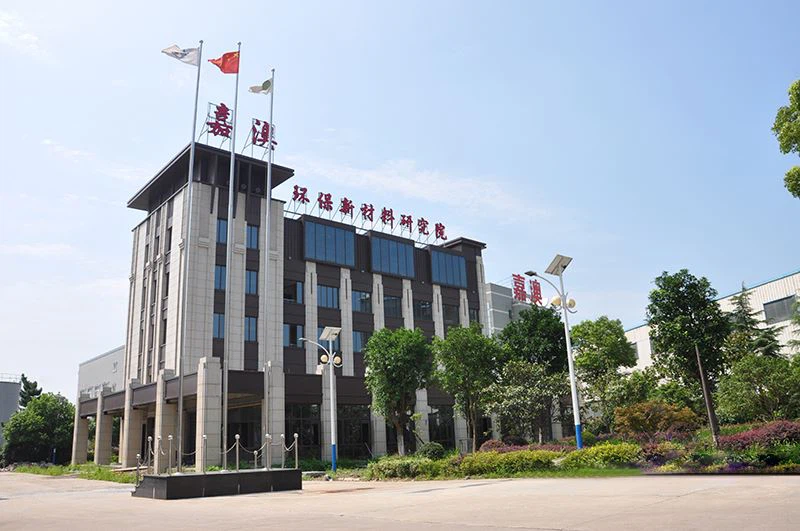
Our Factory
Jiaao enprotech was founded in Jan, 2003, specializing in research, production and sales of environment friendly plasticizers. Company was listed on Shanghai Stock Exchange A-share on April 28, 2016, stock code 603822.After years of hard work, JIAAO ENPROTECH now has formed the 3 main product species, i.e. Epoxy products, Fossil products and Multifunctional composite products. Our plasticizers are widely used in cable, artificial leather, flocking, light box membrane, plastic film, plastic decking, outdoor water pipe, etc.


Our certificates


video
FAQ
Q: What is the purpose of fillers as polymer additives?
Q: What do polymer additives do?
Q: What is the difference between additive and filler?
Q: What is the purpose of plasticizers as polymer additives?
Q: What are the application of polymer additives?
Q: What are the benefits of polymer additives?
Q: What is the purpose of fillers as polymer additives?
Q: What are the advantages of adding additives to glass?
Q: What are the most common polymer additives?
Q: What is the importance of polymer additives?
Q: Why are additives adding to the plastic problem?
Q: Which of the following is an additive polymer?
Q: What is the role of additives in the recycling of polymers?
Q: What is additive products?
Q: What is an additive in cosmetics?
Q: What is the role of additives in the recycling of polymers?
Q: How will additives shape the future of plastics?
Q: Why are plasticizers added to polymers?
Q: What is the role of additives in plastics?
Q: Why application of polymer additives such as antioxidants in plastic products may help?
We're well-known as one of the leading additive manufacturers and suppliers in China. If you're going to buy high quality additive at competitive price, welcome to get more information from our factory.