

Comprehensive Guide to Plastic Additives Every Plastics Professional Must Bookmark
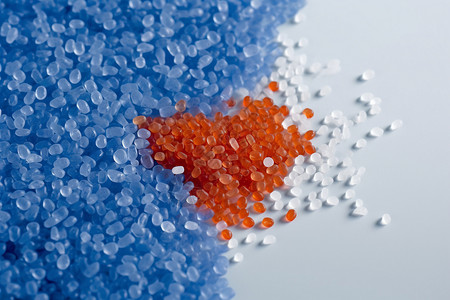
Plastic additives, also known as plastic modifiers, are compounds added during the processing of polymers (synthetic resins) to improve their manufacturability or enhance the inherent properties of the resin. Their primary roles include optimizing processing conditions, increasing production efficiency, and enhancing product performance, value, and lifespan. For instance, plasticizers are added to reduce the molding temperature of polyvinyl chloride (PVC) and improve flexibility, while blowing agents are used to create lightweight, shock-absorbing, heat-insulating, and soundproof foamed plastics. Some plastics have decomposition temperatures close to their processing temperatures, making heat stabilizers essential for successful molding.
Thus, plastic additives play a critical role in plastic processing. Common additives include heat stabilizers, plasticizers, antioxidants, light stabilizers, flame retardants, blowing agents, antistatic agents, colorants, brighteners, fillers, coupling agents, lubricants, and release agents.
I. Stabilizers
1. Heat Stabilizers
Heat stabilizers are primarily used for PVC and its copolymers. During thermal processing, PVC releases small amounts of hydrogen chloride (HCl) before reaching its molten state. HCl acts as a catalyst, accelerating polymer chain degradation. Without timely neutralization, this degradation can render PVC unprocessable. Adding alkaline substances to PVC neutralizes HCl, stabilizing the material.
Common Heat Stabilizers:
Primary stabilizers: Salts and soaps containing heavy metal cations (lead, calcium, cadmium, zinc, barium, aluminum, lithium, strontium). Lead sulfate and lead stearate are widely used.
Auxiliary stabilizers: Epoxidized oils and esters, which also exhibit some plasticizing effects.
2. Antioxidants
Antioxidants delay or inhibit polymer oxidation, extending product lifespan. Common types include:
Hindered phenols
Phosphites
Thioesters
Blends
Hindered amine light stabilizers (HALS)
3. UV Absorbers
UV absorbers protect polymers from photodegradation by converting UV energy into harmless heat or longer wavelengths. Categories include:
Salicylates
Benzophenones
Benzotriazoles
Substituted acrylonitriles
Triazines
HALS
4. Light Screens
Light screens absorb or reflect harmful UV waves. Examples include carbon black, zinc oxide, titanium dioxide, and zinc barium white.
II. Processing Additives
These additives improve flow properties and processability, often by reducing viscosity or surface tension.
1. Plasticizers
Plasticizers reduce intermolecular forces, increasing chain mobility and flexibility. Common types:
Primary plasticizers: Phthalates, sebacates (excellent compatibility, low volatility).
Secondary plasticizers: Chlorinated paraffins (used with primary plasticizers to cut costs).
2. Lubricants
External lubricants (e.g., stearic acid, metal stearates) reduce friction between the polymer melt and equipment.
Internal lubricants (e.g., low-molecular-weight polyethylene) lower intermolecular cohesion.
3. Release Agents
These prevent adhesion between molds and products. They must resist heat, stress, and chemical interactions (e.g., with styrene or amines).
III. Reinforcements and Fillers
Added to boost strength, rigidity, or reduce costs. Common examples: glass fibers, carbon black, calcium carbonate, metal oxides.
IV. Coupling Agents
These improve interfacial bonding between fillers and polymers. Silane coupling agents (RSiX₃) and titanate coupling agents are widely used.
V. Crosslinking Agents
Used in thermosetting resins and rubber to form molecular networks, enhancing strength and elasticity. Examples: sulfur (for rubber) and dicumyl peroxide (for polyethylene).
VI. Blowing Agents
Physical blowing agents: Expand via phase change (e.g., gases).
Chemical blowing agents: Decompose to release gas (e.g., azodicarbonamide).
VII. Nucleating Agents
Used in semi-crystalline polymers (e.g., PP, PE) to refine crystal structure, improving transparency, strength, and thermal resistance.
VIII. Colorants
Inorganic pigments: Heat/light stable but less vibrant.
Organic pigments: Vibrant colors but lower durability.
Masterbatches: Concentrated pigment-resin blends for easier dispersion.
Fluorescent brighteners: Absorb UV light and emit blue-white fluorescence.
IX. Antimicrobial Agents
Inhibit microbial growth (bacteria, fungi, algae). Essential for hygiene-focused products.
X. Flame Retardants
Reduce flammability or enable self-extinguishing properties. Common types: halogenated, phosphorus-based, and mineral fillers.
XI. Antistatic Agents
Dissipate static charges via hydrophilic/hydrophobic structures. Types include amine derivatives, quaternary ammonium salts, and PEG-based compounds.