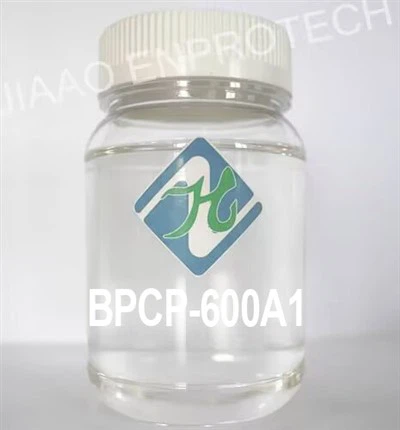
Environmentally-friendly Non-toxic PVC Plasticizers

Environmentally-friendly Non-toxic PVC Plasticizers
Details:
Environmentally-friendly Non-toxic PVC Plasticizers J210 is an eco-friendly plasticizer designed for high-performance and sustainable manufacturing. This clear, colorless liquid works well with PVC, improving flexibility and durability. It stays soft in cold temperatures, with a condensation point below -10°C, and performs better than traditional plasticizers like DOA.
Send Inquiry
Download
Description
Technical Parameters
 
Products Description


Property

Indicator

Typical Value

Test Method

Appearance

Transparent oily liquid

Transparent oily liquid

Visual observation

Color, Pt-Co, # ,≤

20

10

GB/T 1664- 1995

Density, 20℃,g/cm3

0.935±0 .015

0.935

GB/T 4472-2011

Acid Value,mg KOH/g ≤

0.5

0.3

GB/T 1668-2008

Moisture, % ≤

0.1

0.07

GB/T 6283-2008

Flash Point, % ≥

190

200

GB/T 1671-2008

Epoxy Value,% ≥

5.0

5.6

GB/T 1677-2008

Iodine Value,,%≤

6.0

3.0

GB/T 1676-2008

Bio-based Content, % ≥

80

86

GBT39715.1-2021


Performance and Characteristics


Environmentally-friendly Non-toxic PVC Plasticizers J210 is an eco-friendly plasticizer designed for high-performance and sustainable manufacturing. This clear, colorless liquid works well with PVC, improving flexibility and durability. It stays soft in cold temperatures, with a condensation point below -10°C, and performs better than traditional plasticizers like DOA.


Made from renewable sources, J210 is non-toxic and stable, offering a safer, more sustainable alternative. It also meets strict EU environmental standards, including REACH and ROHS, making it suitable for exports and eco-conscious markets.


Applications


The eco-friendly, non-toxic plasticizer J210 is highly suited for a broad range of applications requiring enhanced flexibility, durability, and environmental safety. With a higher plasticization efficiency than traditional options like DOA, J210 provides a softer, more flexible end product, even in low-temperature conditions, making it ideal for outdoor and cold-weather applications.

jiaao pvc material plasticizer

Flexible PVC Materials

J210 is perfect for flexible PVC products like hoses, cables, and inflatables, ensuring flexibility and durability across various temperatures, even with frequent bending and movement.

jiaao coating plasticizer

Coatings and Protective Layers

J210 enhances PVC coatings, improving thermal stability and durability. Its heat-stabilizing properties help maintain coating integrity under temperature changes, making it ideal for protective layers in various applications.

Jiaao outdoor water hose plasticizer

Outdoor water hose

J210's excellent low-temperature performance makes it ideal for outdoor applications like garden hoses, water tubes, and other flexible PVC products exposed to varying weather. It offers lasting flexibility and environmental resistance, ensuring durability for outdoor use.

product-348-261

Films and Sheet

This plasticizer is perfect for PVC films in packaging, agriculture, and construction, enhancing softness, durability, and cold resistance. It also meets EU REACH and ROHS standards for global compliance.


FAQ

Q: What is a plasticizer used for?

A: Plasticizers are additives that increase the flexibility, workability, and pliability of materials, particularly in plastics like PVC (polyvinyl chloride). They reduce the brittleness of these materials, making them easier to handle and shape. Plasticizers are commonly used in a wide range of products, including electric wire sheaths, artificial leather, flooring, cable insulation, and medical devices, where flexibility and durability are essential.

Q: What are examples of plasticizers?

A: DOTP (di-2-ethylhexyl terephthalate): Known for its superior electrical and thermal resistance, it's widely used in PVC products, automotive applications, and as a high-quality lubricant additive. DOA (dioctyl adipate): A plasticizer with excellent cold resistance, commonly used in flexible PVC applications like food packaging and films. DOP (dioctyl phthalate): A traditional plasticizer used in many applications, though it is being phased out in favor of more environmentally friendly options. Biobased Non-Toxic Plasticizer J210: An eco-friendly alternative derived from renewable resources, used in PVC products that require enhanced flexibility and environmental safety.

Q: What are the 3 types of plasticizers?

A: Phthalate Plasticizers: Traditionally the most common type, used in a variety of applications such as PVC products, toys, and medical devices. Examples include DOP (dioctyl phthalate). However, due to health concerns, their use is being reduced or regulated. Non-Phthalate Plasticizers: These are alternatives to phthalates and include options like DOTP (di-2-ethylhexyl terephthalate) and ATBC (acetyl tributyl citrate). They are often used in applications where non-toxic and environmentally friendly materials are required. Biobased Plasticizers: Derived from renewable resources, these are eco-friendly options like the Biobased Non-Toxic Plasticizer J210. They are increasingly popular due to their sustainability and compliance with stringent environmental regulations.

Q: What is a plasticizer in a polymer?

A: A plasticizer in a polymer is an additive that increases the flexibility, durability, and workability of the polymer. It works by embedding itself between the polymer chains, reducing intermolecular forces, and making the material softer and more pliable. This is particularly important in materials like PVC, where plasticizers are essential to achieve the desired physical properties for various applications.

Q: What plasticizers are used in PVC?

A: Several plasticizers are used in PVC to enhance its flexibility and durability, including: DOTP (di-2-ethylhexyl terephthalate): Known for its high resistance to heat and electricity, used in automotive interiors and electrical sheaths. DOA (dioctyl adipate): Provides excellent cold resistance, making it ideal for food packaging films and other flexible PVC products. DOP (dioctyl phthalate): A traditional plasticizer, though its use is declining in favor of safer alternatives. Biobased Non-Toxic Plasticizer J210: An environmentally friendly option that offers superior plasticization efficiency and meets EU regulatory standards, making it suitable for a wide range of PVC applications.

Q: What is a plasticizer in food?

A: Plasticizers are not intended for direct use in food products. However, they can be found in materials that come into contact with food, such as packaging, processing equipment, and storage containers. In these applications, plasticizers are used to enhance the flexibility and durability of materials like PVC, which may be used in food wrap, tubing, or gaskets. It's crucial that plasticizers used in food-contact materials comply with food safety regulations to ensure they do not migrate into the food in harmful amounts. Commonly approved plasticizers for such uses include phthalate-free alternatives like DOTP (di-2-ethylhexyl terephthalate) and biobased options like ATBC (acetyl tributyl citrate). These alternatives are chosen for their safety and low toxicity, adhering to strict standards set by regulatory bodies such as the FDA and the EU.


Hot Tags: environmentally-friendly non-toxic pvc plasticizers, China environmentally-friendly non-toxic pvc plasticizers manufacturers, suppliers, factory, eco dehch, how is soybean oil made, chemical structure of soybean oil, specific gravity of soybean oil, soya oil manufacturing process, pure soybean oil

Send Inquiry