

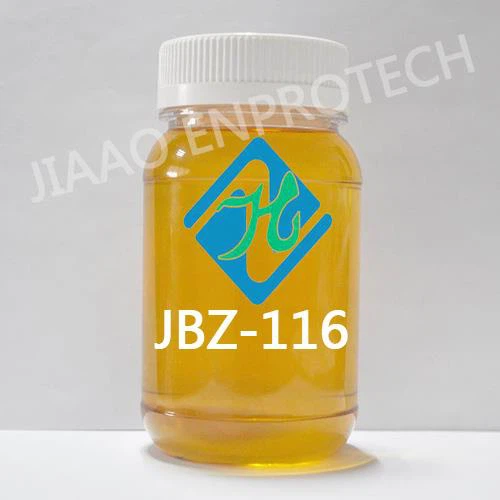
Barium Zinc Stabilizer is an additive used to stabilize polyvinyl chloride (PVC) materials. It usually consists of compounds of barium and zinc, such as barium zinc hardatite (BaZnCd hardatite) or barium zinc coated hardatite (BaZnCd hardatolite). These compounds can provide thermal stability and light stability during the processing and use of PVC materials, thereby prolonging their service life.
Advantages of Barium-Zinc Stabilizer
Excellent thermal stability
It provides excellent thermal stability to pvc, allowing the material to resist degradation during high temperature processing. This is critical during pvc extrusion or other thermal processing.
UV resistance
Barium-zinc stabilizers have excellent uv resistance, making them ideal for outdoor applications where plastic materials are exposed to sunlight.
Good dispersion
Good dispersion means that the stabilizer can be evenly distributed in the pvc matrix without agglomeration or local concentration. Excellent dispersion can help stabilizers be used effectively in pvc formulations and help reduce process problems during production, such as color difference or non-uniformity of properties.
Cost-effectiveness
They are cost-effective and efficient, requiring lower dosages compared to other types of stabilizers. This means manufacturers only need to use the minimum amount of stabilizer to achieve the desired level of stabilization, saving costs and improving the overall performance of the product.
Compatibility
Barium-zinc stabilizers are known for their compatibility with a wide range of additives and processing conditions. This makes them versatile and easy to integrate into manufacturing processes, allowing greater flexibility in the production of plastic materials. This versatility and compatibility makes barium zinc stabilizers a popular choice for many plastics manufacturers.
Environmental friendly
It's also worth noting that barium-zinc stabilizers are considered environmentally friendly compared to other types of stabilizers, such as lead-based stabilizers. As awareness of environmental issues and regulations increases, barium-zinc stabilizers have become more widespread as a sustainable and environmentally friendly option for stabilizing plastic materials.
Excellent transparency
Barium cadmium zinc pvc stabilizers are known for their high transparency, which means they are effective in maintaining the transparency and optical clarity of pvc products. This property is particularly important when manufacturing products that require a clear, transparent appearance, such as films, hoses, etc. High transparency stabilizers help reduce chromatic aberration, enhance visual appeal, and ensure products have excellent optical performance and appearance quality to meet the needs of a variety of applications.



Why Choose Us
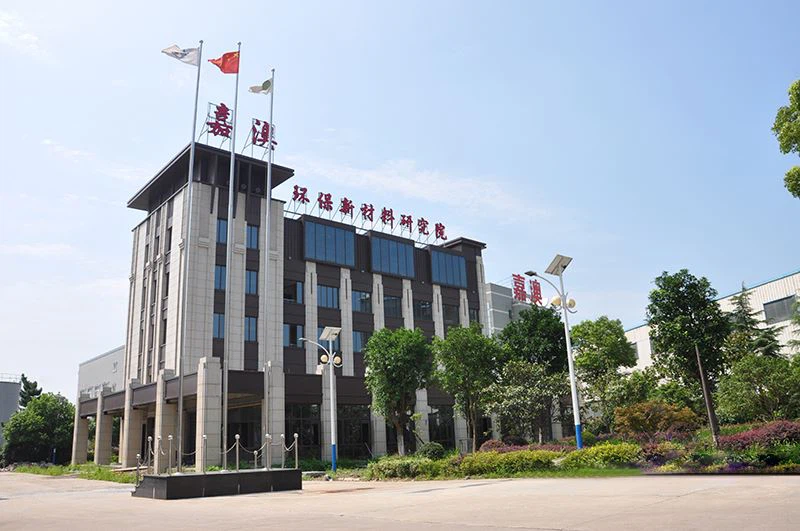
Our factory
JIAAO ENPROTECH was founded in Jan, 2003, specializing in research, production and sales of environment friendly plasticizers. Company was listed on Shanghai Stock Exchange A-share on April 28, 2016, stock code 603822.
High quality
We are manufacturers of environmentally friendly plasticizers, stabilizers, and biodiesel, specializing in the development of eco-friendly, renewable, and biodegradable bio-based plasticizers. Our diverse range of products is widely used in various plastic product sectors associated with daily life.
Quality control
Our company manufactures a wide range of non-toxic, environment-friendly plasticizers, the main plasticizers are registered in EU's REACH, testified by SGS, products reach the international Non-toxic and environmental protection Standard .
Professional team
Recognized as a National Torch Program high-tech enterprise, the company holds numerous national patents and actively contributes to industry standards.With a robust R&D system and talent cultivation mechanism, including recruitment of PhDs and Masters, the company focuses on high-value biomass energy products research.
Innovation
With a vision to become a global leader in environmental biomass energy, the company's efforts in product innovation and development aim to drive advancements in this field.
Types of Barium-Zinc Stabilizer
Powder barium zinc stabilizer
Specifically TP-81 Ba Zn stabilizer, is a cutting-edge formulation tailored for artificial leather, calendering, or PVC foamed products.
Liquid barium zinc stabilizer
Which are combinations of barium and zinc soap compounds, to improve heat stability.They play a vital role in preventing the degradation of PVC during its processing.

Application of Barium-Zinc Stabilizer
Medical devices
Medical professionals frequently use PVC for products such as tubing and blood bags.Here, the non-toxicity of the barium/zinc stabilizer is crucial.
Pipes and fittings
PVC pipes benefit from the enhanced heat stability offered by these stabilizers, ensuring they don't break down quickly over time.
Electrical cables
PVC is a common insulation material for wires. The stabilizers ensure that the insulation remains effective and doesn't degrade upon exposure to heat or over time.
Flooring
PVC flooring, especially in commercial spaces, benefits from the durability provided by barium/zinc stabilized PVC, leading to longer-lasting products.
Clear PVC products
Items like clear PVC shoes, bags, and other fashion products rely on the stabilizers to maintain their clarity and luster.
Automotive industry
The automotive industry represents a significant application segment for barium-zinc type heat stabilizers . This sector demands high-performance materials to ensure the durability and safety of various automotive components. Barium-zinc stabilizers are particularly valued for their ability to enhance the thermal stability of automotive parts, such as dashboards, trim, and under-the-hood components. As regulations tighten around vehicle emissions and environmental impact, the automotive industry increasingly relies on these stabilizers to meet stringent performance standards.
Electrical and electronics industry
The electrical and electronics industry is another key segment for barium-zinc type heat stabilizers. These stabilizers are crucial in the production of cables, connectors, and insulation materials, where heat resistance is essential for reliable performance. In electronics, where components are subjected to significant thermal stress, barium-zinc stabilizers help prevent thermal degradation and ensure the longevity of electrical products.
Packaging industry
In the packaging industry, these stabilizers are used in the production of flexible films, containers, and other packaging materials that must maintain their integrity under varying temperature conditions. Barium-zinc stabilizers help prevent the degradation of packaging materials due to heat exposure, ensuring that they remain functional and effective throughout their intended use.
Consumer goods industry
The consumer goods sector also relies on barium-zinc type heat stabilizers to enhance the performance and durability of various products. In applications such as household goods, toys, and appliances, these stabilizers help maintain product quality and safety by providing excellent thermal stability. Barium-zinc stabilizers prevent the degradation of materials exposed to high temperatures, ensuring that consumer products retain their appearance and functionality over time.
Differences Between Barium Zinc and Calcium Zinc Stabilizers
When it comes to the production of polyvinyl chloride (PVC), stabilizers play a crucial role in ensuring the quality and durability of the final product. Two commonly used stabilizers are barium zinc and calcium zinc stabilizers. While both are effective in stabilizing PVC, they differ in their composition and performance.
Barium zinc stabilizers are composed of barium, zinc, and other organic compounds. They offer excellent heat stability and weather resistance, making them ideal for outdoor applications. However, they are not recommended for use in food packaging due to the potential toxicity of barium.
Calcium zinc stabilizers, on the other hand, are composed of calcium, zinc, and fatty acids. They provide good heat stability and are non-toxic, making them suitable for use in food packaging. They also have low volatility, which means they do not release harmful substances during the production process.
In terms of processing, barium zinc stabilizers require higher processing temperatures than calcium zinc stabilizers. This can lead to longer processing times and higher energy costs. Calcium zinc stabilizers, on the other hand, have a lower processing temperature and can be processed faster and more efficiently.
Overall, the choice between barium zinc and calcium zinc stabilizers depends on the specific application and requirements of the PVC product. Both offer their own benefits and drawbacks, and it is important to choose the right stabilizer to ensure the quality and safety of the final product. When in doubt, consult with a professional to determine the best stabilizer for your needs.
Proper storage is crucial for maintaining the quality of barium zinc stabilizers. Typically recommend storing these products in a dry and cool environment to maximize their shelf life. Additionally, the stabilizers are often shipped in sealed containers to prevent any leakage and ensure that they arrive in the best condition.
What Are the Trends and Development Directions of Barium-Zinc Stabilizer in the Market
Factors driving the growth of the Barium Zinc Stabilizer Market
Technological advancements: Continuous innovation and advancements in technology play a crucial role in expanding the barium zinc stabilizer market. New technologies often lead to improved products, increased efficiency, and enhanced customer experiences, driving demand and market growth.
Increasing consumer demand: Growing consumer awareness and demand for barium zinc stabilizer products/services contribute significantly to market expansion. As consumers seek more sustainable, efficient, or advanced solutions, companies respond by innovating and expanding their offerings.
Regulatory support and initiatives: Supportive regulatory frameworks and government initiatives can catalyze market growth by promoting investments, reducing barriers to entry, and fostering innovation in the barium zinc stabilizer sector.
Emerging markets and opportunities: Expansion into new geographical markets or tapping into emerging sectors within the barium zinc stabilizer industry provides opportunities for growth. Companies that identify and capitalize on these emerging trends can gain a competitive edge and expand their market presence.
Strategic partnerships and collaborations: Collaborations and partnerships between industry players, research institutions, and technology providers can drive innovation and accelerate market growth. These partnerships often enable companies to leverage complementary strengths and resources to develop new products or enter new markets.
Our Factory
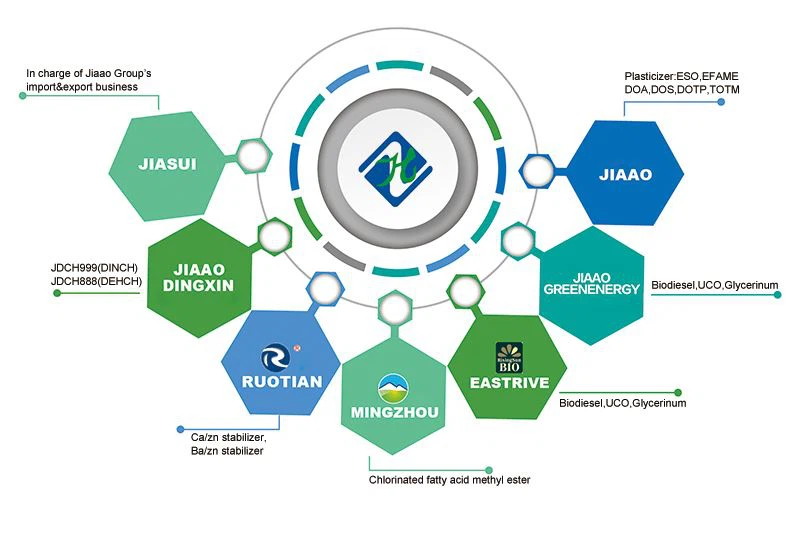
Jiaao enprotech was founded in Jan, 2003, specializing in research, production and sales of environment friendly plasticizers. Company was listed on Shanghai Stock Exchange A-share on April 28, 2016, stock code 603822.After years of hard work, JIAAO ENPROTECH now has formed the 3 main product species, i.e. Epoxy products, Fossil products and Multifunctional composite products. Our plasticizers are widely used in cable, artificial leather, flocking, light box membrane, plastic film, plastic decking, outdoor water pipe, etc.

Our certificates


video
FAQ
Q: What do stabilizers do in polymers?
Q: What do Stabilisers do in plastic?
Q: Why would you add a stabiliser to a plastic?
Q: What is the function of stabilizer in PVC?
Q: What is the difference between plasticizers and stabilizers?
Q: Why is stabilizers added to polypropylene?
Q: Why stabilizers are added to PVC?
Q: What is barium zinc stabilizer used for?
Q: What is a stabilizer in food?
Q: When should I use stabilizer?
Q: Is stabilizer good for health?
Q: Are eggs a stabilizer?
Q: What foods have stabilisers?
Q: What does stabilizer do in food?
Q: What is the function of stabilizer in medicine?
Q: Why are stabilizers used?
Q: What is the stabilizer for polypropylene?
Q: Why are stabilizers added to polymers?
Q: What additives are used in polymer stabilizer?
are used to stabilise polycarbonates and acrylics, oxanilides are used for polyamides and polyurethanes, while benzophenones are used for PVC. Strongly light-absorbing PPS is difficult to stabilize.
Q: What is the difference between stabilizer and preservative?
Hot Tags: barium-zinc stabilizer, China barium-zinc stabilizer manufacturers, suppliers, factory, Ba Zn Heating Stabilizer, Heating Stabilizer, Ba Zn Stabilizer


